AI Servers
Industrial Automation
AI Servers
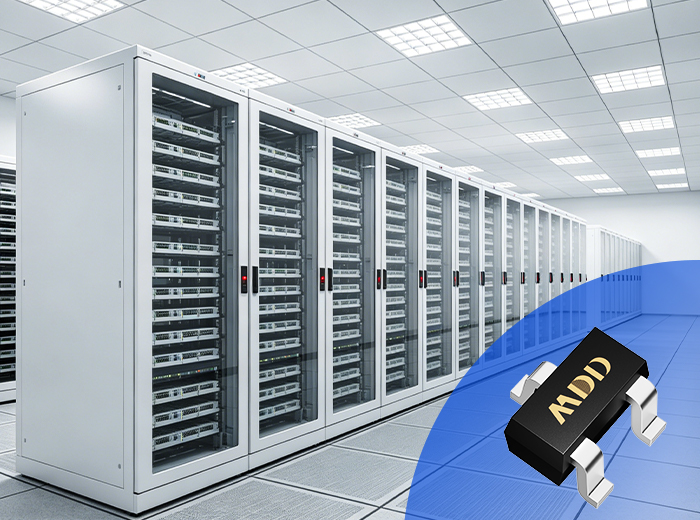
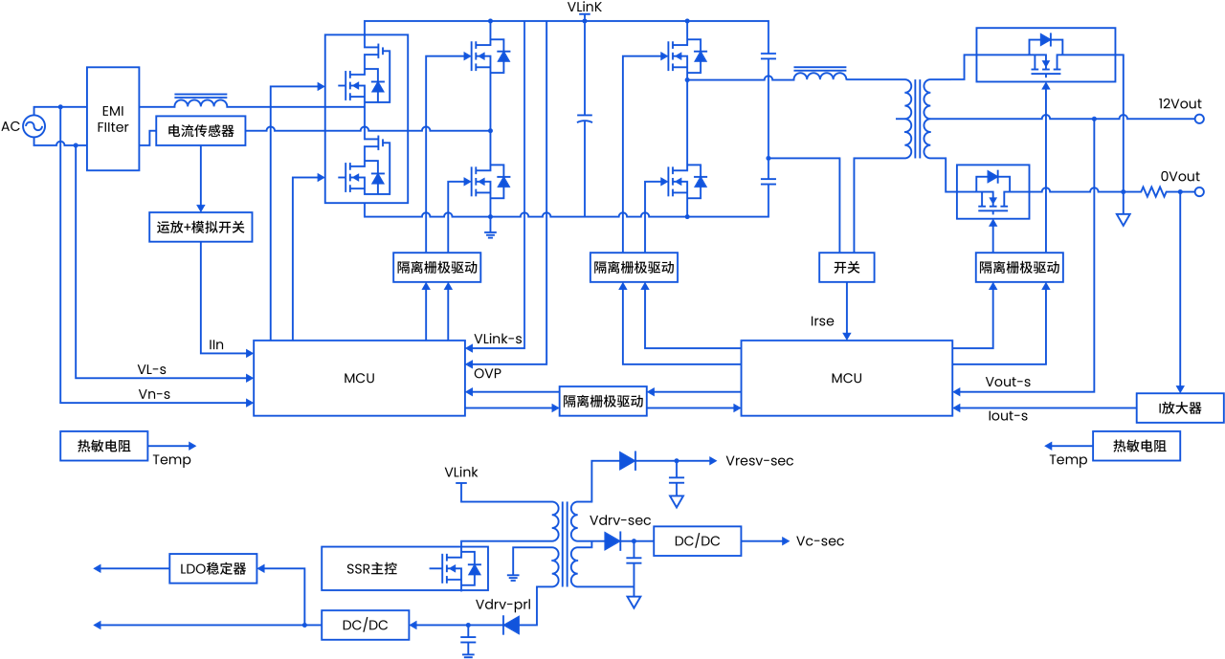
As core devices requiring high computing power, the stable power supply and efficient operation of the GPUs and CPUs inside AI servers rely on power conversion units—centered around MOSFETs and bridge rectifiers—to provide efficient and stable power conversion. They also depend on components such as fast-recovery diodes to achieve high-frequency, low-loss, and precise rectification within the VRM voltage regulation modules.
Market Overview

The following table lists four types of server chassis, their features, and recommended use cases:

1. Tower Servers

· Features:

Tower servers resemble personal computers from the front but are longer on the sides. There is no uniform standard for their design. Generally, they do not require a rack for installation. They offer ample internal space, allowing for flexible configuration and strong scalability.

· Application Scenarios:

Suitable for small and medium-sized enterprises (SMEs) and entry-level customers. Primarily used in scenarios such as corporate websites, high-traffic multimedia apps, medical imaging, and Virtual Desktop Infrastructure (VDI).

2. Rack-Mount Servers

· Features: These are industrially standardized products available in standard sizes such as 1U (1U = 1.75 inches), 2U, and 4U. While compact in size, their internal space limitations restrict expandability and pose challenges for heat dissipation.

· Application Scenarios: Large enterprises, public institutions, and IDCs. Primarily used in cloud computing, software-defined storage, hyper-converged infrastructure, CDN caching, and supercomputing centers.

3. Blade Servers

· Features: Multiple server units in a multi-slot configuration can be installed within a standard-height rack chassis, achieving high availability and high density. Each “blade” is essentially an independent server; while cost-effective, they face significant thermal management challenges.

· Application Scenarios: Specialized industries and high-performance computing, cloud computing, etc., such as banking, telecommunications, finance, and internet data centers.

4. High-Density Servers

· Features: A server specifically designed for enterprise-level applications. Its advantages include the high integration of computing, storage, and networking, enabling the consolidation of a large number of processors and I/O expansion capabilities within a very small physical space.

· Application Scenarios: Large-scale data centers, flexibly supporting a wide range of applications such as biomedicine, oceanography, meteorology, and surveying.


Application Considerations
When designing computer notebooks, engineers should consider the following to ensure optimal performance and user experience:
Durability
notebooks can take a beating when used on the go — from travel to trips to the coffee shop. Spill-resistant keyboards and robust components are essential
Block Diagram

When designing computer notebooks, engineers should consider the following to ensure optimal performance and user experience:


Recommended Products
When designing computer notebooks, engineers should consider the following to ensure optimal performance and user experience:
Serial number
Product Model
Product Type
Data Sheet
1
Bridge rectifiers
2
Bridge rectifiers
3
Bridge rectifiers
4
Bridge rectifiers
5
Bridge rectifiers
6
Bridge rectifiers
7
Electrostatic protection diode
8
Electrostatic protection diode
9
Electrostatic protection diode
10
Electrostatic protection diode
11
Thyristor Surge Suppressors
12
Electrostatic protection diode
13
Electrostatic protection diode
14
Electrostatic protection diode
15
Electrostatic protection diode
16
Electrostatic protection diode
17
Electrostatic protection diode
18
Electrostatic protection diode
Recommended Applications
pinpaimdd@mddchenda.com
+86 189 2606 7185