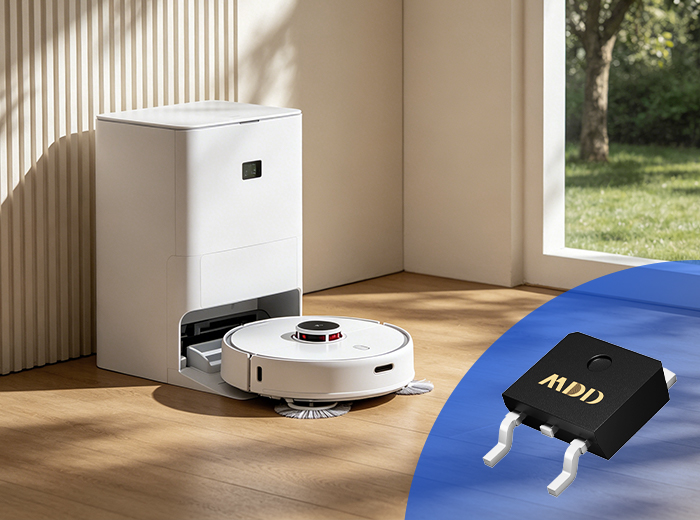
The structure of a robotic vacuum cleaner can be divided into five main components: the system control module, motor module, sensor module, communication module, and power supply module.
The robot uses ultrasonic sensors and proximity sensors in the sensor module to perceive its external environment. It feeds the collected data back to the system control unit, which then uses internal algorithms to calculate and plan the overall operating path, thereby implementing an integrated intelligent cleaning solution that combines “localization, mapping, planning, and cleaning.”
ESD Protection Solution: Smart robotic vacuums can perform comprehensive cleaning along optimized paths and automatically return to the charging dock when their battery runs low. Since the charging port is exposed to the outside environment, internal circuits are highly susceptible to damage without proper protection; therefore, protecting the charging port is of utmost importance. In addition, many of the robot vacuum’s external interfaces and sensors—such as buttons, USB ports, RF antennas, and I/O ports—require ESD protection.

When designing computer notebooks, engineers should consider the following to ensure optimal performance and user experience: